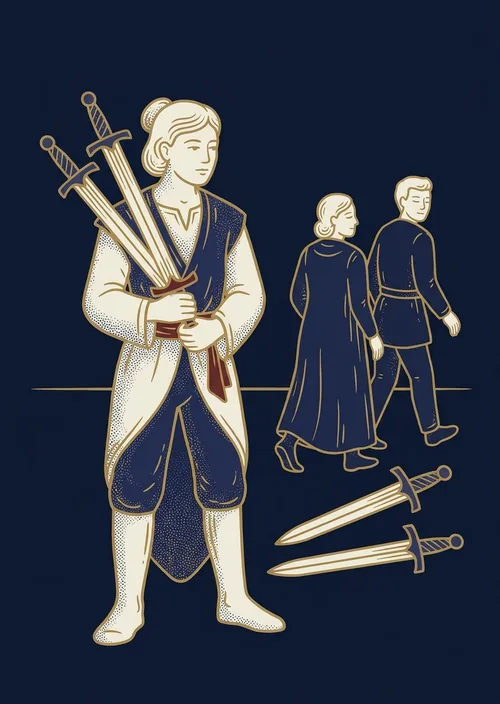
The one who kept the swords
A figure in the foreground collects swords, two of them already over his shoulder, and looks back at two departing figures with an expression readers usually describe as a smirk. Two swords lie on the ground where they were dropped. The sky is ragged and the water behind is choppy, which is unusual detail for a pip card and clearly intentional.
What makes the image work is the point of view. The card is drawn from behind the winner, so you see what he sees, which is other people leaving. Nothing in the picture suggests he was in the wrong. It only shows what the win cost, and the tradition keeps those two facts separate on purpose.
Upright and reversed
Upright, the meaning is a fight won that damaged something worth more. Conflict, hollow victory and hostility are the keywords. The victory is genuine, which is the part that gets softened in gentler readings. Somebody did prevail. The card's observation is about the balance of what was gained against what was spent, and it declines to say that the winner should have lost.
Reversed, two readings sit opposed. One is making peace, an approach to repair after the fact. The other is nursing the grudge instead, the resentment settling in and becoming permanent. Which applies is decided by the surrounding cards and by whether anyone in the situation has moved. A reversal here is not automatically resolution, and treating it that way is the commonest error made with this card.
Fives, and what swords add
Every five in the deck disturbs the stability the four had reached, which is why the group reads uncomfortably across all four suits. What changes between them is the kind of disturbance, and that comes from the suit.
Swords is the suit of air, of thought, speech and argument, and it is the coldest suit in the deck. Conflict in air is not physical damage, it is what gets said and what cannot be taken back. That is why this five is harsher than the Five of Wands even though the wands card shows more visible fighting. Here the argument had a winner, and the cost was to a relationship rather than to a body.
Air, and the question it puts
The element is air, and no astrological correspondence is attached to this card in the site's data. The Golden Dawn did assign decans to the numbered minors, and some decks print them, but the elemental attribution is the one nearly all decks agree on. Air stands for the faculty that separates and distinguishes, which cuts well and rarely mends.
Kept honest, a reading is a structured prompt and not a report on your future. This card puts a question that is easy to state and hard to sit with, which is whether the thing you are trying to win is worth what winning it will cost you with the people involved. It does not tell you to concede.
Questions people ask about this
What does the Five of Swords mean?
A fight won that damaged something worth more. Conflict, hollow victory and hostility are the keywords. The win is real, and the card's point is the ratio between what was gained and what it cost.
What does the Five of Swords reversed mean?
Either making peace after the fact or nursing the grudge instead. The reversal is not automatically resolution, and the rest of the spread is what decides which of the two readings holds.
Am I the winner or the loser in this card?
The image is drawn from behind the figure holding the swords, so the default reading places you there. Many readers will also read it from the departing side when the question makes that fit better.
How is it different from the Five of Wands?
The wands card is friction with no winner and no malice. This one has a winner and a cost, and the damage is to a relationship rather than to anyone's patience. Air argues to win, fire argues to be heard.
Does the Five of Swords mean I should give in?
It makes no such recommendation. The tradition describes a cost rather than prescribing a course, and the useful question is whether the thing being fought for is worth the price attached to winning it.
What element does this card belong to?
Air, along with the whole swords suit. Air in this system covers thought, speech and distinction, which is why conflict in this suit shows as words that cannot be withdrawn rather than as physical harm.