What the image shows
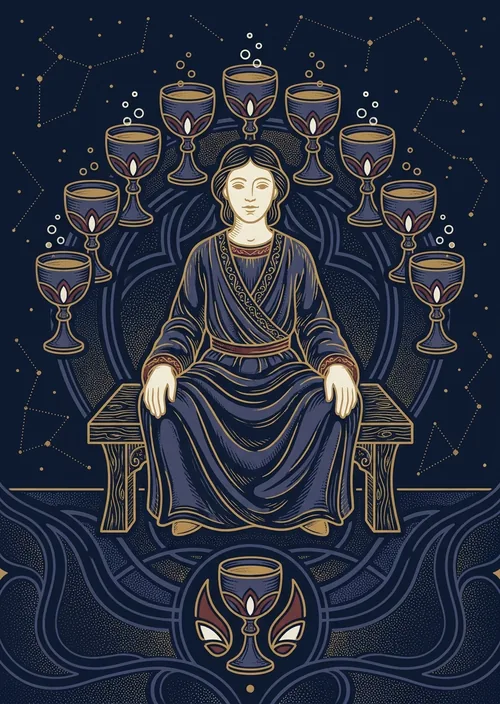
A well fed man sits on a low bench with his arms folded. Behind him nine cups are lined up on a curved table under a blue cloth, raised above his head. He looks pleased and he is facing the viewer rather than the cups.
The tradition reads the arrangement as display. The cups are set out where they can be seen, and the man is between them and us. Whether that is read as pride, hospitality or complacency varies by reader, and the ambiguity is old rather than modern. Nothing in the picture is being shared.
Upright and reversed
Upright, the reading is contentment and satisfaction, with the wish granted somewhere in the mix. The important qualifier is that the satisfaction is measured against terms the person set themselves. The card says the standard has been met. It does not say the standard was a good one, and reading it as unambiguous good fortune drops half of what it carries.
Reversed, the usual reading is the wish granted and not delivering what it promised, which shows up as hollow success. Overindulgence is a second reading, and a wish still unmet is a third. Distinguishing them is not difficult in practice. If the spread already contains achievement, read the hollow version. If it contains appetite or excess, read the second. If it contains waiting, read the third.
Nines, and what cups add
The nine is the last numbered card before completion, and every nine shows its suit at close to full strength without resolution. In swords that is worry at maximum, in wands endurance at maximum. The number supplies the intensity rather than the mood.
Cups supply feeling and satisfaction, so nine of them is contentment at full volume. That is why this card is pleasant where the other nines are not, and it is also why it tips so easily. Contentment at full volume is one small step from complacency, and the reversal is mostly about which side of that line the situation falls on.
Water, and the question it puts
The element is water, from the suit. The correspondences used here do not give planets or signs to numbered minor cards. The Golden Dawn scheme assigns decans to them, but that layer sits outside the data this site works from, and importing it into one page would make the deck inconsistent.
The prompt is worth taking seriously precisely because the card is a friendly one. Whose terms were these, and would you set the same ones now. A wish set some years ago and granted today is a common way of arriving at a satisfaction that does not fit. The card asks the question and this site does not answer it for you.
Questions people ask about this
Is the Nine of Cups the wish card?
That is the traditional nickname, and it oversells the card. The reading is satisfaction measured against terms you set yourself, which is a narrower claim than a wish being granted.
What does the Nine of Cups mean reversed?
Most often a wish granted that does not deliver. Overindulgence and a wish still unmet are the other two readings in common use, and the rest of the spread points to which fits.
Why are the cups behind the figure?
They are set out on a raised table where they can be seen, and the man sits between them and the viewer. Readers take that as pride, hospitality or complacency depending on the spread.
Does it guarantee I get what I want?
No. Nothing on this site predicts outcomes. The card describes a state of satisfaction and asks whether the terms that define it are still ones you would choose.
How is it different from the Ten of Cups?
The Ten is generally read as shared contentment involving other people. The Nine is a private satisfaction, and nothing in the picture is being passed around.
What element does it carry?
Water, from the suit of cups. Numbered minors in this deck are given a suit element and no planetary or sign attribution.