What the image shows
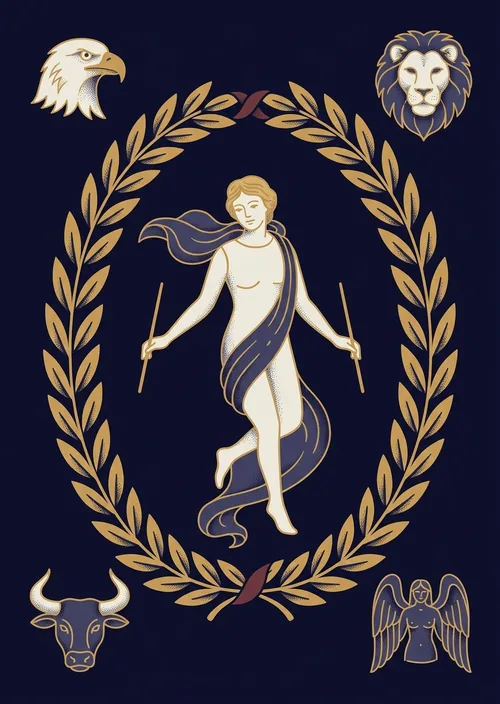
A figure dances inside an oval wreath, holding a wand in each hand, with a strip of cloth as the only garment. In the four corners sit a man, an eagle, a bull and a lion, the same four creatures that appear on the Wheel of Fortune earlier in the sequence. The wreath is bound at top and bottom, closing it into a continuous shape.
The tradition reads the four corner figures as the fixed signs and the four elements, present together and in balance. Their reappearance is the point. What was scattered across the Wheel is here arranged around a centre, and the figure in the middle is inside the wreath rather than passing through it. The two wands, one in each hand, repeat the single wand the Magician holds at the other end of the sequence, which readers take as a deliberate echo.
Upright and reversed
Upright, the reading is a cycle closed properly rather than abandoned. Completion, integration and arrival are the words usually attached to it, and integration does the heavy lifting. The card is not read as a prize for effort. It is read as the state where the separate parts of something have been brought into one working whole, which is why the corner figures matter more than the dancer.
Reversed, the common reading is that the thing is almost finished and the last part is the part being avoided. That last part is often small and disproportionately unpleasant: the conversation that closes an arrangement, the file that gets sent, the account that gets shut. A second reading has the completion real but unacknowledged, where the work is done and nobody, including the reader, has marked it. Which applies depends on whether the surrounding cards show anything still outstanding. Both readings are undramatic, and the card is unusual among the trumps in having no severe reversal at all.
Where it sits and what rules it
The World is the twenty first trump and the last of them, following Judgement. The Fool, numbered zero, either opens the sequence or stands outside it depending on the deck, so most readers treat the trumps as a loop rather than a line. Read that way, the World is the point at which the sequence can begin again, and readers who take the card as a full stop lose that.
The correspondence is Saturn, and the element earth, in the Golden Dawn scheme that most modern decks use. Saturn is the planet the tradition associates with limits, structure and time taken seriously, which is a reasonable fit for a card about finishing something rather than leaving it. The assignment is a nineteenth century one.
The question it puts
The question worth taking from this card is whether anything in your life is finished in substance but not in form, and what the remaining piece would cost you. The answer is usually specific and usually smaller than the avoidance around it. It also tends to be nameable in a sentence, which is a reasonable test of whether you have identified it or are still circling.
This site treats a reading as a structured prompt rather than information about what is coming. The World does not promise you an ending or tell you one has arrived. It asks what closing properly would look like here, and leaves the assessment with you.
Questions people ask about this
Is The World the last card in the deck?
It is the last of the twenty two trumps. Whether it is the final card overall depends on how a deck orders the Fool, which is numbered zero and sometimes stands outside the sequence entirely.
What does The World mean reversed?
Usually that something is almost complete and the remaining part is being avoided. A second reading has the work genuinely finished but unacknowledged. Whether anything is still outstanding in the other cards decides between them.
Which planet is The World linked to?
Saturn, with the element earth, in the correspondence the Golden Dawn set out and most modern decks inherited. Saturn's association with limits and time fits a card about finishing rather than abandoning.
Why do the same four figures appear on the Wheel of Fortune?
They are read as the fixed signs and the four elements. Their return in the corners of this card is deliberate: what turned on the Wheel is here arranged and settled around a centre.
Does The World mean I have succeeded?
The tradition reads it as completion rather than reward, and this site makes no claims about outcomes. The useful reading is about integration, not achievement.
Can I draw The World in a spread here?
Yes. Every layout on the site draws from the full deck, reversals included unless you switch them off, and each reading is reproducible from its own link.