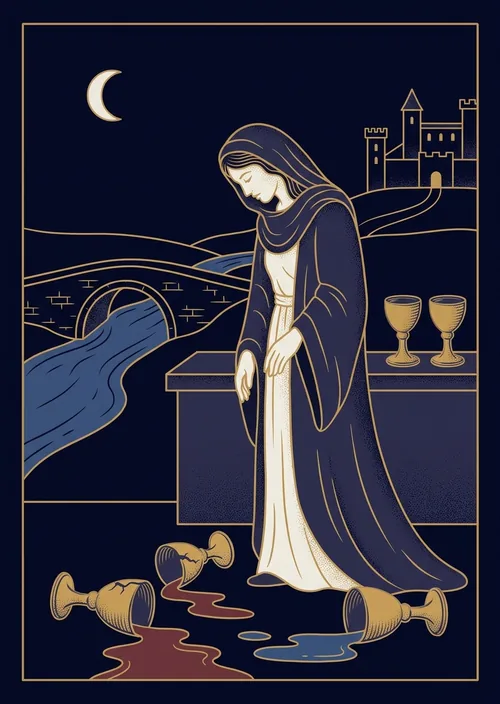
Three spilled, two standing
The figure wears a long black cloak and faces down at three cups tipped over on the ground. Behind him, unnoticed, two cups remain upright. A river runs across the middle of the scene and a bridge crosses it towards a small building in the distance. Every element in the picture is arranged around what he is not looking at.
The loss is real. The tradition is careful about this, and so should any reading be. Nobody in the image knocked the cups over out of carelessness that we can see, and the card does not suggest the spill was imaginary or the reaction excessive. It describes attention, and where the attention has settled.
Upright and reversed
Upright, the meaning is real loss and the tendency to face only the loss. Grief, regret and disappointment are the keywords. The two standing cups are part of the upright meaning rather than a correction to it. They are simply behind him, which is where remaining things usually are while someone is grieving.
Reversed, the tradition offers two readings that sit close together and mean different things. One is beginning to turn round, the first movement of acceptance, noticing what is still there. The other is refusing to, grief that has hardened into a position. There is no way to tell them apart from the card alone. The surrounding cards, and honestly the question you asked, are what decide it, and a reader who declares it recovery without looking is being kind rather than accurate.
Fives, and what cups add
The fives across the deck describe stability being lost. Four is the settled number in each suit and five is what disturbs it, which is why all four fives are uncomfortable cards. Reading one begins with asking what had been steady until now.
Cups is the suit of water, of feeling, attachment and relationship, so the disturbance here lands emotionally rather than materially or socially. That is what makes this five quieter than the others. Nothing is being fought over and nobody is standing outside a lit window. The whole event has already happened, and what the card describes is the aftermath.
Water, and the question it puts
The element is water, and the site's data gives no astrological attribution for this card. The Golden Dawn assigned decans to the numbered minors, but decks vary in whether they print them, so the elemental reading is the more dependable one. Water stands for what is felt rather than decided, and it explains why this card resists being argued with.
The honest note is that a reading is a structured way of asking yourself something, not a message about your future. This card puts an uncomfortable question, which is whether looking at the spilled cups has become the way you stay close to what you lost. It does not ask you to stop, and it does not promise that turning round is available yet.
Questions people ask about this
What does the Five of Cups mean?
Real loss, and the tendency to face only the loss. Grief, regret and disappointment are the keywords. The two upright cups behind the figure are part of that meaning rather than an argument against it.
What does the Five of Cups reversed mean?
Either the beginning of turning round, an early movement towards acceptance, or a refusal to turn round at all. The card alone cannot separate them, so the rest of the reading and the question you brought decide.
Is the Five of Cups telling me to cheer up?
No, and reading it that way flattens it. The tradition treats the loss as genuine and the grief as reasonable. What it describes is where attention has settled, which is an observation rather than an instruction.
What do the two upright cups mean?
They are what remains, standing behind the figure and out of his view. Readers take them as things still available rather than as consolation, and the card makes no claim that noticing them is currently possible.
Which element is the Five of Cups?
Water, the element of the whole cups suit, standing for feeling and attachment. That is why this five lands as grief while the same number in pentacles lands as hardship and in wands as argument.
How does it compare to the Three of Swords?
Both deal with pain, but the Three of Swords is the moment of the wound and this card is the period afterwards. One describes something happening, the other describes living in its aftermath.